ChatGPT Is Not “AI”, It’s a Product.
Somewhere along the way, we collectively made a mistake. We started calling ChatGPT “AI.”
ChatGPT is impressive. It’s useful. It’s a breakthrough in user experience.
But it is not the definition of AI, and treating it as such is actively holding back serious businesses, governments, and European innovation. ChatGPT is a consumer-facing interface on top of a proprietary model, hosted in hyperscale cloud infrastructure, optimized for generalized use cases and Silicon Valley economics.
Real AI , especially for B2B, regulated industries, and strategic autonomy looks very different. And Europe, quietly but deliberately, seems to understand this better than most.
AI Is Not a Chatbot
Let’s start with a simple reframing.
AI is not:
- A single large language model
- A chat interface
- A subscription SaaS tool
- A black box trained on unknown data
AI is:
- A capability embedded into systems
- A decision-support layer on top of your data
- A workflow accelerator
- A reasoning and retrieval engine aligned with business context
ChatGPT is a general-purpose language model service. AI, in practice, is an architecture.
The Real Value of AI is the Data
For businesses, the model itself is rarely the differentiator.
What matters is:
- Your internal documents
- Your processes
- Your customer history
- Your operational data
- Your domain-specific knowledge
A generic model trained on the public internet will never understand:
- Your contracts
- Your compliance rules
- Your edge cases
- Your internal language
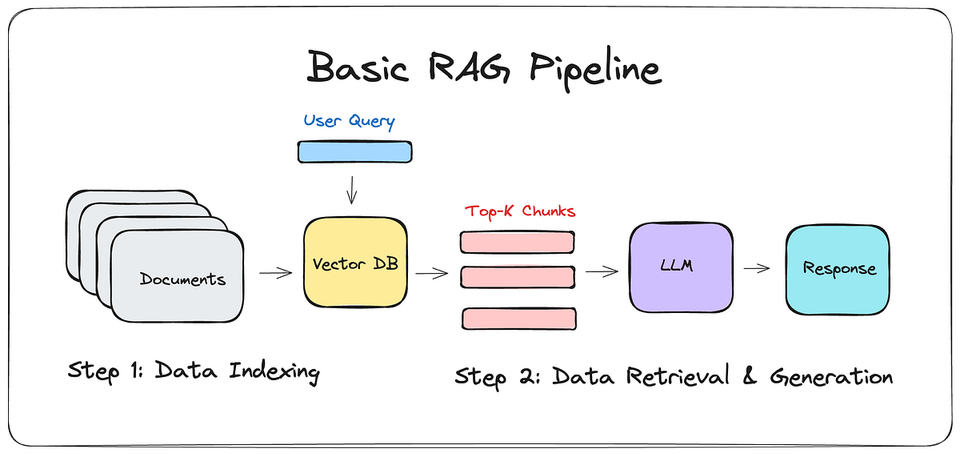
This is why Retrieval-Augmented Generation (RAG) is the most important AI pattern in production today.
RAG: Where AI Becomes Actually Useful
A RAG pipeline allows you to:
- Keep your data private
- Store it in your own vector database
- Retrieve only relevant context
- Let the model reason over your data, not replace it
In other words: The AI does not “know” anything. It retrieves and reasons, just like a good employee.
This is not a ChatGPT feature. This is a system design choice.
Why Open Source Models Matter More Than Ever
Open-source models (Mistral, LLaMA variants, Qwen, etc.) change the power dynamic completely.
They allow organizations to:
- Run models on-premise or in private cloud
- Control data residency
- Audit behavior
- Customize performance
- Avoid vendor lock-in
Most importantly: They separate AI capability from Big Tech control. This is not an ideological argument, it’s a strategic one.
Mistral + ASML
The Mistral story is often misunderstood. This is not “Europe copying OpenAI.”This is Europe doing something fundamentally different. There is a reason both companies are in a strategic partnership.
Why Mistral Matters
- Open-weight models
- Strong performance-per-parameter
- Optimized for deployment, not just benchmarks
- Designed to be used, not just showcased
Why ASML Matters
ASML is not an AI company — and that’s the point. ASML understands:
- Strategic infrastructure
- Long-term sovereignty
- Industrial dependency risk
By supporting Mistral, Europe is signaling something very clear:
AI is infrastructure — not a consumer app.
Just like:
- Chips
- Energy
- Telecom
- Manufacturing tooling
AI is now strategic capacity.
Hyperscale AI vs European AI: Two Philosophies
Silicon Valley Model
- Centralized
- Cloud-only
- Closed weights
- Data extraction
- Growth-at-all-costs
- Consumer-first
European Model (Emerging)
- Federated
- On-prem / private cloud
- Open or semi-open
- Data sovereignty
- B2B-first
- Compliance-by-design
These are not competing products , they are competing worldviews.
Why On-Prem AI Is Not “Old-School”, It’s the Future
On-prem AI is often dismissed as:
- Too complex
- Too expensive
- Too slow
This is outdated thinking. Modern on-prem AI stacks:
- Use containerization
- Scale horizontally
- Integrate with automation tools (n8n, Make, Airflow)
- Run smaller, more efficient models
- Cost less over time than SaaS subscriptions
For SMEs and enterprises, on-prem AI means:
- Predictable costs
- No data leakage
- Full customization
- Regulatory confidence
AI as an Employee, Not a Product
The most successful AI implementations I see are not “tools.”
They are:
- AI agents handling repetitive analysis
- AI copilots embedded in workflows
- AI systems preparing decisions, not making them
- AI layers that disappear into operations
This is where automation + AI converge. ChatGPT alone can’t do this. RAG + open models + automation pipelines can.
Why ChatGPT Is Still Useful (But Not the Point)
To be clear: ChatGPT is an excellent interface.
It is:
- Great for ideation
- Great for prototyping
- Great for accessibility
- Great for learning
But confusing ChatGPT with AI is like confusing:
- Excel with finance
- PowerPoint with strategy
- Email with communication
It’s a surface layer, not the system.
The Strategic Question Every European Business Should Ask
Not:
“How do we use ChatGPT?”
But:
“Where do we want intelligence to live in our organization?”
- In someone else’s cloud?
- Or inside our own systems?
So, the future of AI is not:
- One giant model
- One chat window
- One hyperscaler
The future of AI is:
- Modular
- Open
- Private
- Embedded
- Context-aware
- European-by-design
ChatGPT didn’t invent AI. It just made it visible. Now it’s time to build it properly. And Europeans are perfectly fine capable of doing that.